If your charity’s based in a specific town or city across the UK, its chances of getting a decent return from national marketing campaigns are, unfortunately pretty low.
The way people engage with causes has changed a lot in recent times – the pandemic just accelerated a process that many charity marketers had already been suspecting: people want to support things that are close to home. And yet, charities are facing a real challenge when it comes to local marketing – their goals and supporter relationships are very different from those in traditional marketing.
Data from the Charity Commission shows that UK charities with a strong local presence saw a 15-20% higher retention rate from grassroots donations compared to those relying solely on the national appeals. Charity marketing’s got a lot in common with traditional marketing – but its core objectives and the way you interact with supporters are fundamentally different. You’re not just trying to sell something or raise awareness, you’re trying to build long-term supporter relationships and show that your cause is worth backing.
Unlike traditional marketing, which tries to cast a wide net, local charity marketing in the UK is all about building relationships within a specific community where your charity’s work really makes a difference.
This article’s going to give you some practical step-by-step tactics that small and medium UK charitable organisations can put into action this month. We’ll cover everything from getting in touch with local press to optimising your Google Business Profile, from building partnerships to using a UK charity CRM system to keep track of supporter relationships and deepen them further. We’ll also look at the importance of developing a comprehensive charity marketing strategy and using digital channels like social media, digital PR and tailored storytelling to raise awareness, engage supporters and get donations coming in. Whether you’re a charity in Swindon, Manchester or Glasgow, these effective strategies will help you raise awareness, get more volunteers and get donations from the people who live in the same area as you.
Learning from other organisations and getting to grips with nonprofit marketing best practice can really help your charity overcome the unique challenges it faces in its local community.
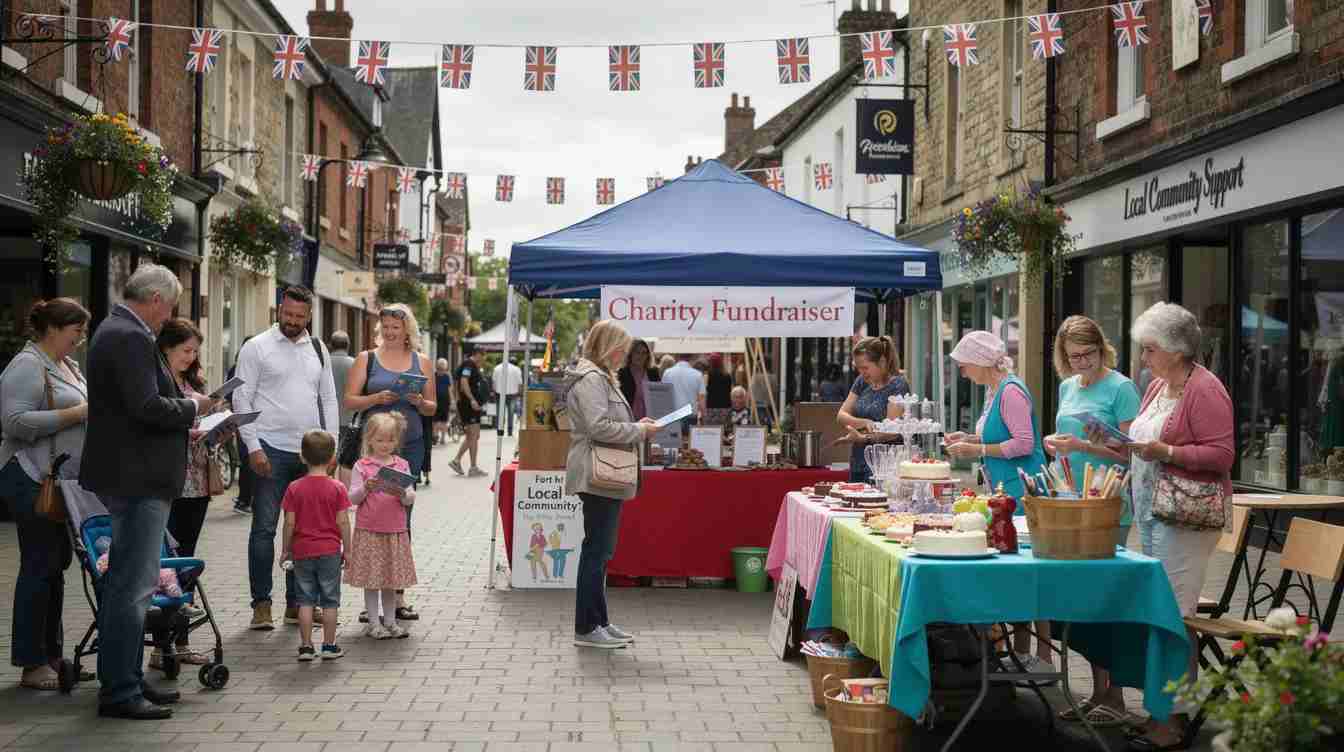 First, Start with Your Local Story and Build a Place-Based Charity Marketing Strategy
Before you start looking at marketing channels, you need a clear local message that everything else revolves around. This isn’t just your general mission statement – it’s a specific commitment that ties your charity’s mission to a particular place and a specific time. It’s about sharing your charity’s story and highlighting what your charity does.
More and more, donors want to see the direct results of their contributions, and effective storytelling is a powerful tool for building relationships with donors by creating emotional connections and showing the impact of donations.
Think about what makes your charity’s work unique in your community. A strong local message might be something like “supporting young carers in Durham since 2012” or the type of pledge Swindon Food Bank made to get “zero hunger in SN1 postcodes by 2025”. Charity Digital’s case studies show that charities with place-based positioning like this achieve 40% higher engagement rates because supporters can actually see where their money’s going.
Here’s how you develop your local positioning:
Draw a map of your local area. Use tools like Postcodes.io to work out the exact postcodes, council wards, NHS Trust boundaries and school catchments you serve. Manchester youth clubs in the M14 ward used this approach to segment their appeals and actually saw an 18% increase in local donations. Knowing your local geography helps you target your marketing efforts more precisely.
Create 2-3 supporter personas for your local area. Think about who actually lives in the area and what motivates them. A retired homeowner in Surrey’s GU postcodes might be interested in legacy giving and respond to different targeted messages than a Zone 4 London commuter who’s looking for quick, impact volunteering opportunities. Research shows that personalised messaging based on such personas increases conversion by 22%.
Use local language, landmarks and events. Reference “haway the lads” in Newcastle communications or “God’s own county” for Yorkshire audiences. Mention the Clifton Suspension Bridge in Bristol event promos or tie campaigns to Leeds Festival. Glasgow homelessness charities gained 35% more shares on social media by using dialect-specific posts. This isn’t just using local lingo for the sake of it – it shows that you’re genuinely part of the community, not just operating in it.
Authenticity and emotional triggers are crucial in storytelling – sharing real stories from individuals or communities who’ve been helped by your charity’s work can create a sense of urgency and meaningful engagement. Modern supporters expect authenticity in non-profit marketing, and storytelling is a powerful marketing strategy that creates a strong emotional connection with your target audience, influencing engagement and motivating support.
Your local story becomes the foundation for all your marketing content. Every press release, social media engagement post and partnership pitch should be orbiting around this anchor.
Reach Out to Your Local Media – Press, Radio and Hyperlocal News Sites
Local media’s still one of the most powerful tools for UK charities – yet many charities overlook it in favour of just doing digital. According to the Reuters Institute 2025 Digital News Report, UK audiences trust regional outlets at a whopping 62% compared to just 42% for national media. This trust translates into action when your charity’s story appears in local press. Local media outreach increases awareness and trust within the community, helping your organisation stay top-of-mind and get recognition for your cause.
Building Your Press List – Let’s Get Started
First, take a stab at creating a simple spreadsheet of regional and local outlets that are actually relevant to your area. I mean, if you’re in the North of England, you probably want to be pitching to the likes of:
- BBC local radio stations (take BBC Radio Leeds for instance, it’s got 2.5 million listeners on its side)
- Community radio stations (I’ve got a soft spot for Leeds Community Radio and Awaz FM in Glasgow)
- Regional dailies (Manchester Evening News is a great one with a whopping 100k+ digital readers, and let’s not forget the Yorkshire Post)
- Weekly papers (Eastern Daily Press in Norfolk has a decent print run of 50k)
- Parish magazines and church newsletters – they might not be the biggest, but they can often be a nice solid foundation
- Hyperlocal online sites (Islington Tribune is always doing great work, and I’m a big fan of Bristol24/7 and South Leeds Life)
Crafting a Strong Local Press Release – Make it Count
When it comes to the structure of your press release, you want to make sure you lead with a hyperlocal angle that’s going to grab the editor’s attention. Here’s a rough guide on what that might look like:
- Headline with location: “Leeds flood victims got a helping hand thanks to 200 emergency parcels from a local charity”
- Town-specific data: “37 families in Croydon got support from us in Q1 2026”
- Human story: a compelling story from a beneficiary that shows just how much of an impact your work has – but only if they’re happy for you to share it
- Quote from local partner: get a quote from a trusted local figure like a council member or GP to add some gravitas
Keep it concise, under 400 words and make sure the local hook is bolded in that opening paragraph. Tie your stories in with specific dates and hooks – council budget announcements in March, school term starts in September, or local festivals like Edinburgh Fringe in August or Brighton Pride. According to NCVO benchmarks, stories that tie in with these kinds of events get 3x more coverage.
 Pitching to Local Radio – Get on Their Radar
Local BBC stations are always on the lookout for community content. Get ready to:
- distill your key messages down to three main points (including a local impact statistic)
- record a 30-second soundbite that’s ready for broadcast
- make yourself available for phone-in shows where listeners might ask questions
Here’s an example pitch: “We helped 847 families in Bradford stay warm last winter – and our coordinator Jane has some amazing success stories to share”
Keep a log of journalists you’ve contacted and coverage you’ve received – this’ll be super handy when it comes to tracking outreach and identifying opportunities for follow-up stories down the line.
Building Community Partnerships and Grassroots Networks – The Power of Partnerships
Partnerships can multiply your reach way more effectively than most single marketing strategies. A study by the Partnership Effectiveness Index from Third Sector found that joint efforts can amplify visibility 5-10x compared to going it alone. When it comes to community engagement, working with established local organisations gets your charity’s story in front of new audiences who already trust the partner. And partnerships are also super effective for driving donations – they foster deeper relationships and encourage people to give more.
Target Partners to Approach
So, who should you be reaching out to? Here are some ideas:
- Schools and universities – assembly talks can be a great way to reach hundreds of pupils, and university volunteering fairs can get you in front of potential supporters
- Faith groups – apparently 30% of UK giving flows through churches (according to CAF UK Giving Report 2025)
- Service clubs – Rotary has 1,200+ UK branches; Lions clubs, Round Table – the list goes on
- Sports clubs – non-league football teams, local rugby clubs, running groups – they’re all fair game
- Resident associations and neighbourhood forums – they often have community noticeboards that can be a great place to promote your work
- Business Improvement Districts (BIDs operate in 300+ UK towns) – they might be able to give you some great exposure
- Libraries – 3,000+ branches across the UK, and they all have community noticeboards
- GP surgeries and health centres – flyer drops can be a great way to get the word out
Partnership Activities That Work – Get Creative
Joint fundraising events deliver strong returns. Here are some ideas to get you started:
- Pub quiz nights in Leeds raising £2,000 per event
- School non-uniform days in Swindon generating £500 per class
- Stalls at local markets like Manchester Christmas markets
- Talks at assemblies reaching hundreds of students
- “Cause of the year” adoptions by local businesses or corporate partners
Creating Partner Packs – Make it Easy for Them
Make it easy for partners to support you by creating a simple 2-page PDF containing:
- a bit about who you help locally (with some stats to back it up)
- three ways to support your work
- ready-made poster and social media copy to save them the hassle
- contact details and further info on getting involved
Apparently 70% of effective small charities use partner packs to streamline collaborations.
Formalising Relationships – Take it to the Next Level
For key partnerships, consider simple MOUs or annual calendars. I mean, something like: “Sponsor a match day each September with Bristol Rovers” or “Annual assembly visit to St Mary’s Primary every October.” Get your beneficiaries and volunteers to become local ambassadors to speak at partner events and council meetings – this’ll add some real gravitas to your work.
Using a customer relationship management system for charities can make tracking partner contacts and opportunities a whole lot easier. Even a basic CRM lets you log interactions, schedule follow-ups, and identify which partnerships are delivering the best returns for your marketing efforts.
Google Business Profile and Local Search Visibility
Get FoundWhen searching for something like “homeless charity near me in Birmingham” or “food bank in Hackney” online, your Google Business profile decides whether you appear in the search results. The thing is these “near me” searches really took off after 2020 – 500% increase according to Google Trends UK – and if a mobile user finds your profile while searching, 70% of them are going to take action. So you need to make sure you’re including local search in your marketing strategy to boost your digital visibility.
Mixing up your marketing channels and using both online and offline tactics is going to be key for non-profits to reach the people they want to help. You need to be using a variety of different channels to get your message heard
Getting Your Profile Up to Speed
Here’s what you need to do to make sure your Google profile is all set up and working for you:
- Claim or set up your profile at business.google.com using your charities address
- Verify your location usually by using a postcode which will send a postcard or a phone verification to you
- Choose the right categories for example “Charity”, “Non-profit organisation” or specific service categories
- Add all your details including your phone number, website and opening hours
- Write a bit about your local services mentioning your town, area and the services you offer (e.g. “Crisis food parcels in Hackney E8 and Tower Hamlets E14”)
Photos of Your Charity
According to some research from BrightLocal, having 20 or more photos on your profile gets you 42% more clicks than if you just had a few. So get loading with:
- A good exterior shot so people can recognise the place when they turn up
- An interior photo or two of your reception area or service space
- Some pictures of events to show off your work in action
- Any photos of staff or volunteers you have working with local people (just make sure you get their permission first)
Using Google Posts
With Google Posts you can share updates on your profile and let people know what’s going on locally. Here are some ideas for what you could use them for:
- Letting everyone know about local events and fundraising campaigns
- Recruiting new volunteers
- Sharing the impact you’ve had on the local community
And don’t forget to include a clear call to action in your posts – ask people to “Donate now”, or “Sign up to volunteer” or “Learn more”.
Getting People to Leave Reviews
Getting people to leave reviews online is crucial. Ask anyone who supports your charity to leave you a review – whether it’s a supporter, a volunteer or someone who refers people to you. You can even send them the review link direct – just search for your charity on Google Maps, click “Write a review” and then copy the link. Profiles with a 4.5 star rating get 25% more people getting in touch with you asking for help.
Optimising Your Website for Local Search
You need to make sure your website is set up to work with your Google profile. Here’s what you need to do:
- Have a separate page for the different areas you support (e.g. /leeds-services, /bradford-services)
- Get a Google Map embedded on your contact page
- Make sure your name, address and phone number (NAP) is the same across all the online directories like Yell.com and 118118
Doing this can get you an extra 30% in local web traffic and help more people find you online
Using Local Facebook Groups and Social Media
Local Facebook groups, Nextdoor and WhatsApp communities have become super important for non-profits looking to raise funds locally. With over 1.2 million Facebook groups in the UK and 40% of users engaging online every week – you can get right in there and talk to your community. And by letting supporters fundraise on your behalf, you can reach even more people within these networks.
When you’re posting in these groups, make sure you include a clear ask – whether it’s a donation request or to get people to sign up for an event. And keep an eye on how people are responding to your posts
Finding the Right Groups
To find these groups you need to search using terms like:
- “Whats on in [Town Name]”
- “[Town] mutual aid” (these boomed during COVID but many are still going strong)
- “[Area] parents” or “[Town] mums”
- “[Area] buy/sell” (check the rules first as some of these may allow charity content)
Find 5-10 groups to join and keep an eye on the posting culture before you start putting in your own requests
Posting Etiquette
Don’t go spamming people with donation requests – that’s a guaranteed way to get yourself kicked out of the group. You need to lead with value:
- Share useful information
- Promote free workshops
- Offer resources
- Then and only then can you start asking for help.Facebook’s ad platform lets you give a post a boost in a tiny radius – around 3 to 5 miles from your own doorstep. For a charity, £50 can get you a massive 5,000 impressions for around just a penny per click. This has to be one of the best deals going for getting your message in front of a specific bunch of people.
Safeguarding Stuff to Think About
When you’re dealing with smaller communities (less than five grand members), be really careful about sharing any details that could put your beneficiaries in the spotlight. Try to keep their stories anonymous and avoid sharing too much about where they are – you wouldn’t want to compromise someone’s privacy. And just remember, the UK GDPR rules apply just as much to your social media as to your email marketing.
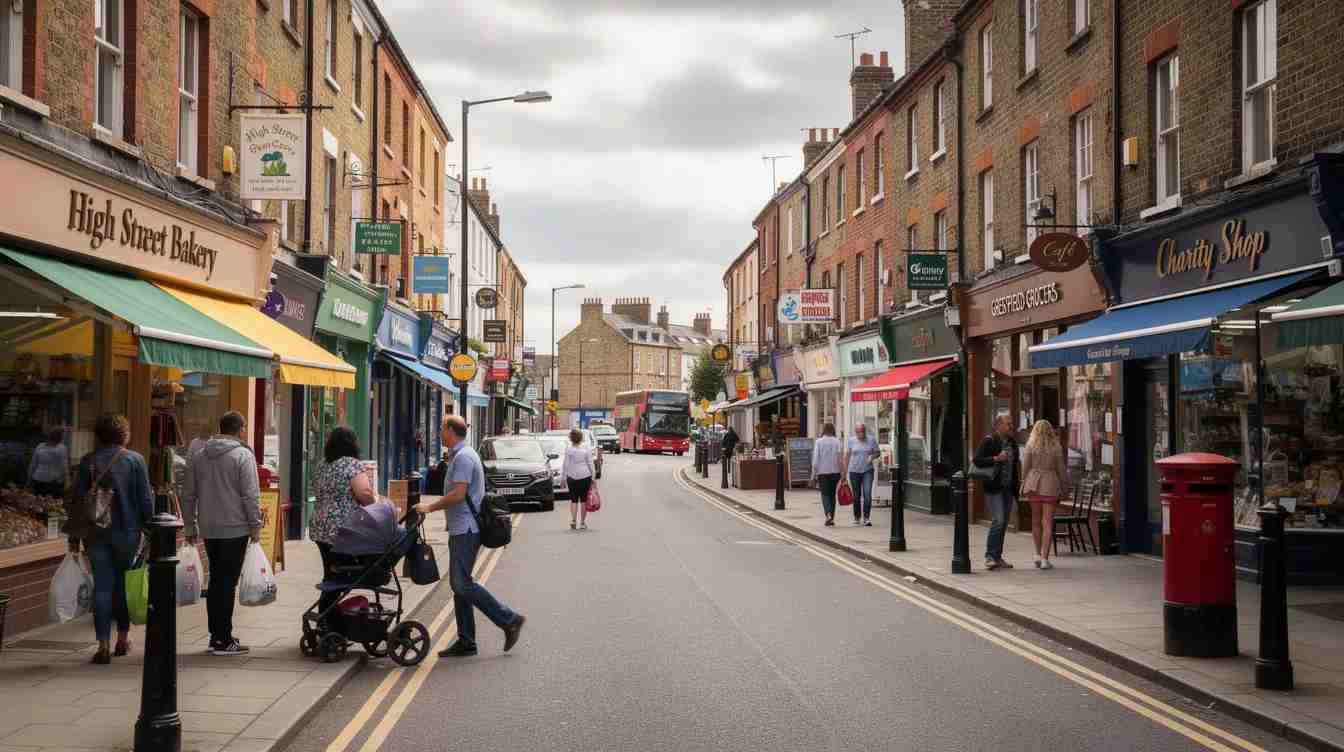 A High Street Presence Still Makes a Riot of Sense
Even though we’re living in a digital age, people in UK communities still love seeing you out and about in person. And it makes a real difference, too – a CAF UK Giving Report from 2025 found that over 65s are more likely to give to charities that have a presence on their high street. For this age group especially, being seen and being visible is what matters.
Charity Shops – Not Just A Place to Buy Bric-a-brac
If your charity has shops (there are loads all over the UK – around 12,000), they’re not just a way to raise cash – they’re a marketing tool too:
- Window displays that match the season and have QR codes to lead people to your donation pages
- Signs about services in the back of the shop for anyone who wants to know more about what you do
- Volunteer posters that catch the eye of passersby
- Events hosted in-store that bring existing supporters in to see what’s going on
Street Stalls and Bucket Collections – The Real Nitty Gritty
Planning your street presence is all about preparation:
- Get the permits from the council (usually £20 a day in most places)
- Book your spots at local markets, shopping centres, and community events
- Get some decent materials – banners, flyers, and those fancy contactless payment machines (about 90% of donations are now made using those)
Think about running little campaigns tied to specific locations: “Give £3 on George Street this Saturday to help fund local counselling sessions for young people”
Good Old Print Materials Still Have a Place
Even with all the digital noise out there, traditional marketing through print still works – especially if you’re trying to get your message out to a broad audience:
- Posters to go on noticeboards in local cafes, pharmacies, gyms and libraries
- Flyers to drop through doors in areas that are priority for you (according to DMA research, you can get a ROI of 1:4 from this)
- Business cards with QR codes so people can scan and learn more about you
Merging Offline and Online
Get the best of both worlds by making your print materials online-friendly:
- QR codes on all your print materials that lead to mobile-friendly donation pages
- Get your social media handles up on all your print materials so people can tag you and share
- Choose event hashtags that are specific to your location
Making Sure Everyone Can Join In
When you’re making sure everyone can join in and feel included, think about making:
- Easy to read font on posters and flyers (at least 24pt please)
- High contrast colours that are easy on the eye
- Make sure your stall is wheelchair-accessible, and think about making sure events are sensory-friendly too, in line with the Equalities Act
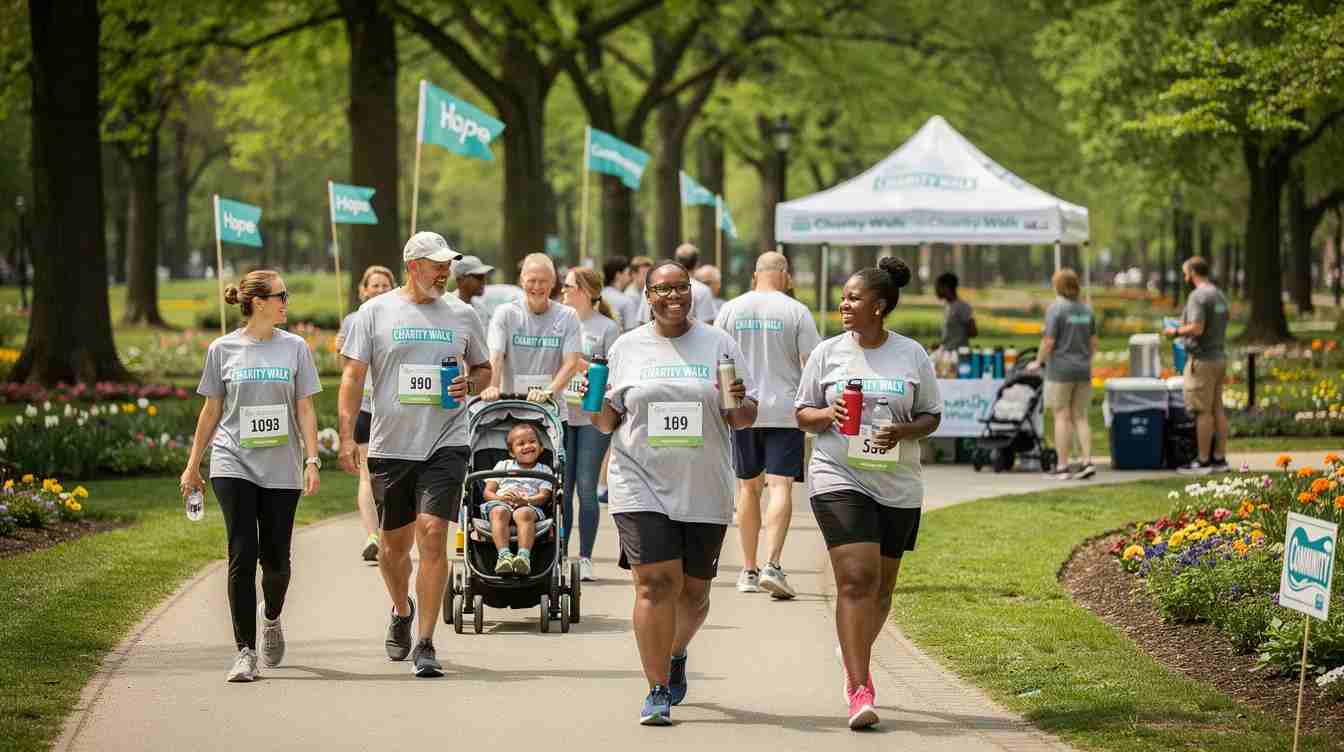 Events and Hyperlocal Fundraising – It’s All About Building Relationships
The more you get involved with the local community, the more they’ll care about what you’re doing. And when you put on events that are all about the local area, you get the chance to build real connections and get some amazing stories that you can use for future marketing. And the best bit? It can convert a load of people into long-term supporters at a rate of 20 to 50%.
A great charity marketing strategy is a must for driving in those donations and getting your message heard above the noise
Event Ideas That Work Well
Here are some ideas that have worked for lots of UK charities:
| Event Type | Typical Venue | Expected Fundraising |
|---|---|---|
| Sponsored walks | Local landmarks, parks | £5,000-£10,000 |
| Coffee mornings | Church halls, community centres | £300-£500 |
| Quiz nights | Local pubs | £500-£2,000 |
| School non-uniform days | Partner schools | £200-£500 per school |
| Street parties | Residential streets (with council permission) | £1,000-£3,000 |
Team Up with Other Businesses
Partner with local businesses like bakeries or coffee shops and make sure their customers know about you. For example: “Summer Street Party with [Local Bakery] to support [Charity Name]”. Win-win – you get more people donating, and they get some good PR.
Setting Your Sights on A Specific Goal
Make fundraising tangible with specific goals tied to a particular location:
- Raise £5,000 to refurbish our drop-in centre in Bolton by November 2026
- Fund 100 sessions of counselling for young people in Lewisham
Get those fundraising thermometers up online, in your shop window, and in your partner venues. This will help make it easy for anyone who wants to donate to actually see the difference they’re making.
Digital Tools to Help You Stay on Track
Use digital fundraising tools to make things easy for people to donate:
- Eventbrite for sign-ups (make sure your events are clearly labelled with your town name)
- JustGiving campaigns that are labelled with your location
- Contactless machines at your street eventsThe 3 days straight after an event are when it all comes crashing down – or not. Send those thank you emails, do a quick update on the impact, and see if you can get those attendees to join your mailing list too. This follow-up business converts 15% of them into long-term supporters – but only if you manage to grab their details and have some systems in place to keep track of them.
Leveraging CRM and Data to Make Local Relationships Stick
Local marketing is only as good as the relationships you build with the people in your community – and that takes more than just a one-off campaign. This is where a good UK charity CRM system comes in – CRM’s turn all those scattered efforts into a clear, long-term strategy for engagement. And on top of all the benefits from using a CRM, making sure you track your success and include data tracking in your marketing plan is key to knowing if all your charity marketing is actually working and if it’s time to make some changes.
CRM reporting makes it easy to keep an eye on those key performance indicators (KPIs) like how much people are donating, how many people are landing on your website, how open your emails are, and what’s happening on social media – and all that gives you loads of valuable insights into your campaigns.
Regularly measuring and analysing what’s working and what’s not lets you make data-driven decisions to keep growing and improving.
What a Good CRM Does at a Local Level
A good CRM lets you keep track of:
- Donors in relation to their postcode, how much they’ve given and what they’re interested in
- Volunteers based on where they live, when they’re available and what skills they bring to the party
- Partners with all their contact details, a record of your relationship and what you’ve worked on together
- Event attendees so you can follow up and invite them to future events
- Press contacts so you can keep track of who you’ve been talking to
The Power of Location-Based Segmentation
With data sorted by geography, you can tailor your marketing:
- Invite “people in Derby city centre” to your Derby event
- Send localised email marketing about your Manchester project to people in Manchester
- See which neighbourhoods are producing the most volunteers and which ones need some recruitment love
Bristol charities that used postcode-based segmentation saw a 25% increase in event attendance – that kind of targeted approach just isn’t possible without good data systems in place.
Choosing the Best CRM for Your UK Charity
When you choose the best CRM for your charity, make sure you prioritise:
| Feature | Why It Matters |
|---|---|
| Gift Aid integration | Automated HMRC claims boost funds by 25% |
| UK GDPR compliance | Data minimisation, consent tracking, right to erasure |
| Postcode lookup | Royal Mail PAF integration for accurate addressing |
| Multi-site support | Essential if you operate in multiple locations |
| Scalability | Handle 10k+ contacts as you grow |
Some popular options for UK non profit organisations include infoodle, ThankQ, Access CRM, Salesforce Nonprofit, and Beacon. Pick the one that best fits your charity sector, budget and technical know-how.
Simple Automations That Help Build Relationships
Even the most basic CRM automations can make a big difference for fundraising teams with limited resources:
- Welcome email series for new local donors
- Annual reminders in the run-up to local appeals
- Project updates tailored to nearby services
- Volunteer anniversary acknowledgements
Recent research from Blackbaud’s 2025 Nonprofit Tech Report shows that these automations retain 40% more supporters long-term.
Demonstrating Impact to Funders
CRM reporting helps you demonstrate local impact to councils, grant-makers and corporate partners. Quickly generate reports showing:
- Service usage by ward or borough
- Volunteer hours contributed per neighbourhood
- Donation patterns by postcode
- Event attendance trends
This kind of data makes your funding applications way stronger and lets you communicate your charity’s work much more effectively.
Measuring Local Impact and Improving Your Strategy
Even with small teams and limited resources, you need to measure your local marketing efforts to know what’s working. An effective marketing strategy needs to track performance just as carefully at the local level as any big national campaign. In today’s charity landscape, digital marketing is essential – using digital channels like social media, paid media and digital PR with a clear marketing plan that outlines your objectives, strategies and how you’ll measure success. That way you can engage supporters, encourage donations and build those long-term relationships for your non-profit organisation.
Key Local KPIs to Track
| Metric | What It Shows | How to Measure |
|---|---|---|
| Local web traffic | Online interest by location | Google Analytics geo-reports |
| Postcode contacts | New supporters by area | CRM reports |
| Event attendance | Community engagement levels | Registration data |
| Volunteer recruits | Growth by neighbourhood | CRM tracking |
| Local press mentions | Media penetration | Manual log or media monitoring |
| Social media engagement by city | Platform effectiveness | Facebook Insights, Instagram analytics |
Aim for specific targets: 20% boost in local web traffic, 10 new volunteers per month from priority postcodes, quarterly growth in press coverage.
Simple Tools for Local Measurement
You don’t need to break the bank to monitor performance:
- Google Analytics location reports (free) show traffic by city and region
- Facebook Insights breaks down engagement by city
- CRM reports segmented by postcode district reveal supporter patterns
- Spreadsheets tracking press contacts and coverage
Quarterly Local Reviews
Schedule reviews every March, June, September and December to:
- Take a closer look at where things are going well
- Identify any opportunities to shift resources around – like doubling down on Bristol’s Facebook efforts if Leeds is really struggling
- Test out some new ideas based on what the numbers tell us
- Share the things you learn with the team and get everyone on the same page
Getting More Than Just Numbers
Numbers don’t give you the whole picture – you need to collect some qualitative feedback too. Try these:
- Quick little surveys for local partners and volunteers , aiming for a Net Promoter Score of over 50\
- Just have a chat with the people you’re helping
- Get some feedback forms done at local events
- Have some conversations with the people on the ground
Testing Out New Ideas
Small tests are the way to go. Try these:
- Use two different leaflet designs on two different high streets and see which one does better\
- Test out two different Facebook ads in different neighbourhoods
- Change up your email marketing subject lines by region
- Try out different event formats in different towns
If something works really well, then scale it up. If it’s a dud, learn from it and move on. Doing it this way will help you raise more cash and get more visibility without wasting a fortune.
All About Building a Recognised and Trusted Local Presence
A local marketing strategy for UK charities needs to tie a few different things together. It’s about consistent local media outreach, genuine partnerships with the community, getting your Google Business Profile sorted, being active on local social media channels, having a visible presence on the high street, and building relationships with people through your CRM. All these things need to work together to make your charity feel like it’s really a part of the local community.
Research shows that charities with a mix of income streams – some from local sources and some from national – did way better in 2023-2026 than the ones that just relied on national funding. Raising money locally and working closely with the community doesn’t just get you more cash – it also helps you weather any economic uncertainty or changes in policy.
Don’t try to do everything at once. Pick a couple of strategies from this guide and commit to them for the next 30 days. Set up your Google Business Profile this week, get in touch with three local partners, send a story to your local radio station. Start with what you’ve got and build from there.
The charities that thrive in their communities are the ones that show up consistently and build close relationships with local groups and individuals – and that every interaction with a supporter is just the start of a longer relationship. Just show up where you are, use what you’ve got, and see what works. Over time, that consistent, place-based activity will help you build the kind of trusted local presence that no amount of advertising can buy.